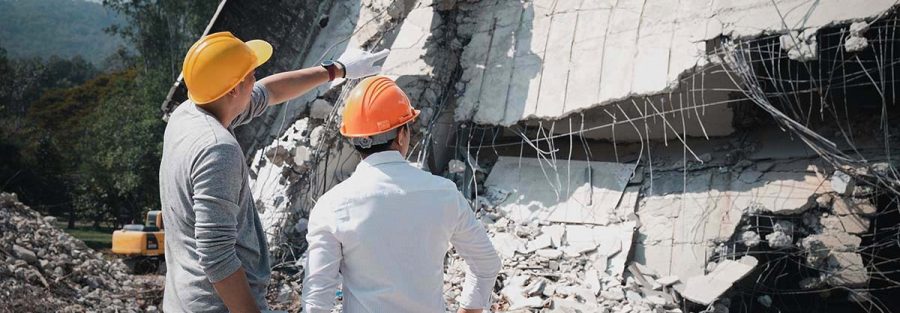
Catastrophic events such as fire, impact, extreme weather, or partial collapse can result in sudden and significant structural damage. In the immediate aftermath, decisions are often required quickly, sometimes before full information is available. Engineering response at this stage focuses on understanding safety, stability, and immediate risks.
Initial response does not aim to provide final conclusions, but rather to establish a clear technical baseline. Determining whether a structure can be safely accessed, partially occupied, or requires stabilization is often the first priority. These early assessments guide next steps and help prevent further damage or unintended consequences.
Assessing Structural Safety Under Time Constraints
Post-event conditions are often dynamic and constrained by access, debris, or ongoing recovery efforts. Engineering assessment must account for incomplete information while maintaining objectivity. Observations are documented carefully, and assumptions are clearly identified to avoid overreach.
At this stage, the focus is typically on identifying compromised elements, load path disruptions, and potential instability. Temporary measures, access restrictions, or monitoring may be recommended to manage risk while further evaluation is planned.
From Immediate Response to Informed Evaluation
Catastrophe response often transitions into more detailed assessment once conditions stabilize. Early observations form the basis for subsequent investigation, diagnostic testing, or failure analysis. Maintaining continuity between initial response and later evaluation is essential to preserving technical clarity.
Early engineering input following catastrophic events supports safety and informed decision-making.
Clear documentation during the response phase helps ensure that later conclusions are grounded in observed conditions. Photographs, notes, and preliminary findings provide valuable context as the evaluation progresses beyond the initial response.
Catastrophe response is a critical phase in the lifecycle of structural evaluation. Timely, objective engineering input helps manage uncertainty, protect safety, and establish a sound technical foundation for subsequent investigation or remediation.