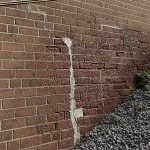
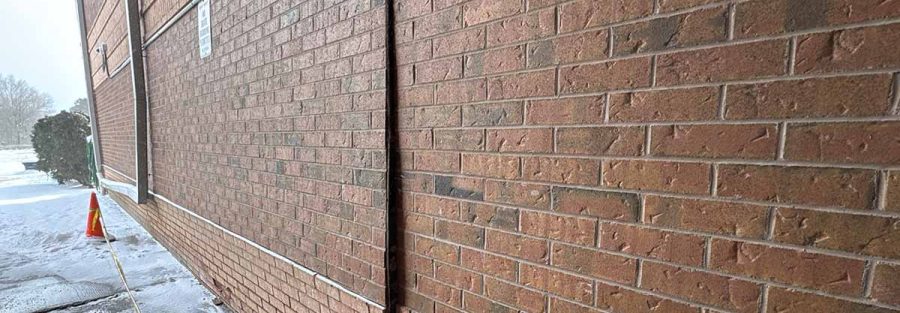
Bulging brick veneer is a condition that indicates the wall system is no longer performing as intended. While the movement may develop gradually, it often reflects deterioration or loss of connection between the veneer and the structural backup wall. The visible displacement is typically the result of changes within the wall assembly rather than sudden failure.
Causes of Veneer Displacement
Out-of-plane movement of brick veneer is most commonly associated with deterioration or corrosion of masonry ties. Exposure to moisture within the wall cavity can lead to corrosion of embedded steel ties, resulting in expansion and eventual loss of restraint. As ties deteriorate, the veneer becomes progressively less supported and may displace outward.
Other contributing factors may include thermal expansion of the masonry, inadequate or non-functioning movement joints, and original construction deficiencies such as insufficient tie spacing or embedment. In some cases, blocked drainage or debris within the cavity may allow water to accumulate, accelerating deterioration over time.
Assessment of Structural Implications
Bulging brick veneer does not typically indicate failure of the primary structural wall. In many cases, the condition is limited to the exterior masonry layer, while the structural system remains stable. However, loss of connection between the veneer and the backup wall can affect the stability of the veneer itself.
Assessment should include review of both exterior and interior conditions. The absence of interior cracking, distortion, or misalignment may suggest that structural movement is unlikely. Conclusions should be based on observed conditions and limited to the scope of the assessment.
Investigation and Confirmation
A visual review alone is generally insufficient to confirm the cause of veneer displacement. Selective opening of the masonry is often required to inspect the condition of masonry ties, the wall cavity, and the backup wall system.
Intrusive investigation allows for confirmation of tie deterioration, presence of moisture, and effectiveness of drainage provisions. Where water infiltration is suspected, further evaluation of sealants, flashing, and weep systems may be required to identify potential sources of moisture ingress.
Remedial Considerations
Repair strategies depend on the extent of displacement and the condition of the masonry. In some cases, the veneer may be stabilized through installation of retrofit masonry anchors that reconnect the brick to the backup wall. In other cases, particularly where displacement is significant or masonry integrity has been compromised, localized removal and reconstruction may be required.
Potential sources of water infiltration should also be addressed as part of the remedial work. Without resolving moisture-related issues, deterioration may continue and result in recurrence of the condition.
Effective assessment of bulging brick veneer requires clear identification of the underlying cause and a repair approach that addresses both structural restraint and moisture management.
A structured evaluation process, supported by appropriate investigation where necessary, allows for informed decision-making and effective remediation. By addressing both the visible displacement and the contributing factors, repairs can be implemented in a manner that is reliable and durable.