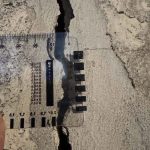

Visual inspection is often the first step in understanding structural condition, but it does not always provide sufficient information. Concealed elements, material degradation, and internal defects can limit what can be reliably assessed through observation alone. Diagnostic testing is used to reduce this uncertainty by providing additional insight into existing conditions.
Non-destructive and minimally invasive testing methods allow engineers to gather information without compromising the integrity of the structure. When applied selectively, diagnostic testing supports more informed assessment and helps avoid assumptions that may otherwise influence conclusions.
When Visual Inspection Is Not Enough
Certain structural questions cannot be answered through observation alone. Conditions such as internal cracking, material deterioration, connection configuration, or reinforcement layout may require additional verification. Diagnostic testing provides a means to investigate these conditions while limiting disruption to the structure.
The value of diagnostic testing lies not in the volume of data collected, but in its relevance. Testing should be targeted to address specific engineering questions and interpreted within the broader context of structural behavior and performance.
Integrating Test Results into Engineering Evaluation
Test results must be evaluated carefully and in conjunction with other available information. Isolated data points can be misleading if not properly contextualized. Engineering judgment is required to interpret results, assess limitations, and understand how findings affect overall structural performance.
Diagnostic testing is most effective when it supports a clearly defined engineering objective.
When diagnostic results are integrated into the assessment process, they help clarify uncertainty and refine conclusions. This approach supports proportional recommendations, whether the outcome involves monitoring, further investigation, or remedial action.
Diagnostic testing is not an end in itself, but a tool within the broader assessment process. When used appropriately, it strengthens engineering understanding and supports decisions grounded in observed conditions rather than assumption.